

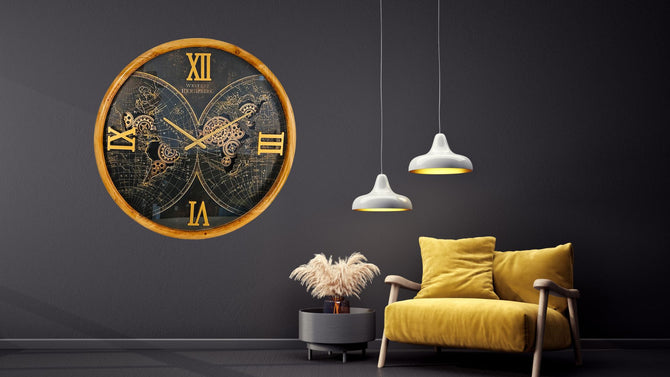










A wall clock is one of those rare home decor pieces that has to earn its place twice — once as a functional timekeeper, and once as a visual anchor on your wall. Get the size right, and it feels like the room was always meant to have it there. Get it wrong, and even the most beautiful clock can look like an afterthought — or worse, overwhelm everything around it.
The good news? Choosing the right size isn't guesswork. There are a few simple principles that interior designers swear by, and once you know them, you'll never second-guess a clock purchase again.
Start With the Wall, Not the Clock
The most common mistake people make is falling in love with a clock online and buying it before they've measured their wall. Your wall space is the starting point — everything else follows from it.
Here's a reliable rule of thumb: your clock's diameter should fill roughly one-third to two-thirds of the wall width it's hanging on. A clock hung above a sofa, for example, looks best when it spans about half the length of the sofa beneath it. Too narrow and it floats awkwardly. Too wide and it competes with the furniture instead of complementing it.
Before you shop, grab a tape measure and note the width of your intended wall or the furniture below the hanging spot. That number will immediately narrow your options in a meaningful way.
Room-by-Room Size Guide
Living Room
This is where statement clocks shine. Living rooms typically have the ceiling height and wall real estate to support a large clock — anywhere from 24 to 36 inches in diameter — without it feeling crowded. If you have a feature wall, a fireplace mantel, or a generous expanse of drywall above a media console, go bold. A oversized clock here reads as intentional art, not just a timepiece.
Kitchen & Dining Room
These rooms call for something in the 12 to 24-inch range. Kitchens are busy visually — cabinets, appliances, backsplash tile — so a clock that's too large can tip the space into chaos. Aim for a size that's easy to read at a glance from across the room, without dominating the whole wall.
Bedroom
Bedrooms tend to reward restraint. A medium clock between 10 and 18 inches usually works beautifully above a nightstand arrangement, a dresser, or as part of a gallery wall. The bedroom is a place of calm, and your clock should feel like it belongs to that atmosphere — present, but not demanding attention.
Home Office or Hallway
Functional spaces call for functional sizing. A clock between 10 and 16 inches is typically enough to keep you on schedule without pulling focus from your work — or making a narrow hallway feel even tighter.
The Visual Weight Factor
Size isn't just about diameter — it's also about visual weight. A minimalist open-frame clock with thin metal hands reads lighter than its actual size. A dark, heavily detailed wooden clock with a solid face reads larger. When you're considering a clock with intricate design details or a bold color, you may want to size down slightly from what your measurements suggest. When the design is airy and simple, you can afford to size up.
- Open, skeletal designs — size up confidently
- Solid dark faces with heavy numerals — size down or give the clock more surrounding space
- Metallic finishes — reflect light and tend to feel lighter on the wall
- Natural wood or matte textures — absorb light and feel more grounded, substantial
One Last Trick: The Paper Template Test
Before committing to a purchase, cut a circle out of kraft paper or newspaper in the diameter you're considering and tape it to the wall. Step back. Live with it for an hour. This simple trick has saved countless people from a return label — and it works every single time.
At The Gears Clock, every product listing includes the clock's exact dimensions so you can measure with confidence before you buy. Because the right clock, in the right size, doesn't just tell time — it tells the story of a room done exactly right.


