











Choosing the right wall clock for your living room is a decision that goes far beyond telling time. In many homes, a wall clock becomes one of the most visible design elements in the space. It sets rhythm, creates balance, and often becomes a subtle reflection of the people who live there.
A living room is where life happens. Conversations, quiet moments, shared experiences. Every object in the room contributes to how that space feels, and a wall clock is no exception. When chosen thoughtfully, it can elevate the entire room. When chosen poorly, it can feel out of place or disconnected.
Understanding how to choose the right wall clock means thinking about purpose, proportion, style, and atmosphere.
Defining the Role of Your Wall Clock
The first step is deciding what role you want the clock to play in your living room.
Some clocks are designed to blend in. They support the space quietly, offering functionality without drawing too much attention. Others are meant to stand out. These clocks act as visual anchors, filling empty walls and giving the room a strong focal point.
Neither option is better than the other. What matters is intention. A clock that tries to do both often fails. Decide whether your clock should support the room or define it, and let that decision guide everything else.
Understanding the Space Before Choosing

A living room is a visual ecosystem. Furniture, lighting, textures, and decor all interact. Before choosing a clock, take a moment to observe the room as a whole.
Is the space minimal or layered. Bright or moody. Symmetrical or eclectic. A wall clock should feel like a natural extension of that environment, not an afterthought.
In well-designed interiors, the clock feels inevitable, as if the wall was waiting for it.
Choosing the Right Size for Balance

Size is one of the most common mistakes when selecting a wall clock.
A clock that is too small disappears on a large wall. A clock that is too large can overwhelm the space and disrupt balance.
As a general guide:
Small clocks work well in compact living rooms or on walls already filled with decor.
Medium clocks suit most standard living rooms.
Large clocks are ideal for feature walls, open spaces, and rooms with high ceilings.
Think of the clock as artwork. If the wall could support a large painting, it can usually support a large clock.
Proportion and Relationship With Furniture
The relationship between the clock and nearby furniture is critical.
A wall clock placed above a sofa, console, or sideboard should visually align with the width of the furniture below. A clock that is too narrow can feel lost. One that is too wide can feel heavy.
Centering the clock and maintaining proportional spacing creates harmony and makes the room feel intentional rather than accidental.
Style Consistency and Visual Identity

A wall clock should speak the same design language as the rest of the living room.
Modern interiors benefit from clean lines and restrained details. Industrial or loft-style spaces pair well with metal finishes and exposed mechanics. Vintage-inspired rooms work beautifully with textured surfaces and Roman numerals.
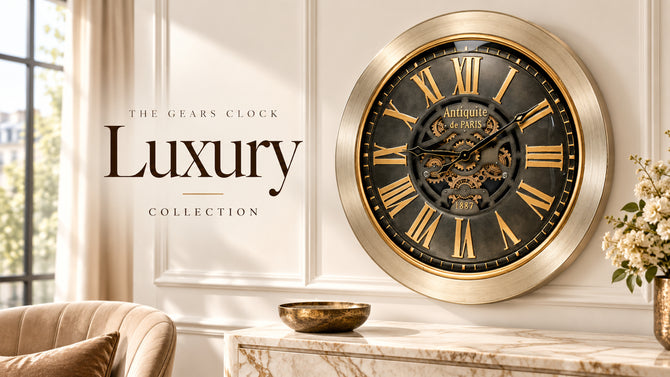
Many homeowners today are drawn to wall clocks that combine strong design with authentic mechanics. Wall clocks with real moving gears offer both visual depth and mechanical character, making them ideal for living rooms that need a distinctive yet timeless focal point.
The Emotional Power of Materials
Materials influence how a room feels.
Wood adds warmth and familiarity. Metal brings strength and precision. Glass introduces elegance and lightness. In a living room, materials should support comfort while adding character.
High-quality materials age better. Over time, they gain presence rather than wear, becoming part of the home’s story instead of something that needs replacing.
Color and Contrast in Living Room Design

Color plays a major role in how a clock interacts with the wall behind it.
Dark clocks on light walls create contrast and visual interest. Metallic or lighter finishes work well on darker walls. Neutral tones like black, bronze, and brushed metal are especially versatile because they adapt easily as decor evolves.
A well-chosen color allows the clock to stand out without overpowering the space.
Movement, Life, and Visual Rhythm

One of the most unique qualities of a wall clock is movement.
Unlike static decor, a clock brings life to a room. The motion of the hands or gears creates rhythm and subtle energy. This is especially powerful in living rooms, where atmosphere matters as much as appearance.
Watching real gears in motion adds a sense of rhythm and life that static decor simply cannot match. This is why many interior designers choose statement gear wall clocks to bring movement, craftsmanship, and personality into modern living rooms.
Sound and Comfort in Shared Spaces
Living rooms are shared environments. Sound matters.
A loud ticking clock can become distracting over time, especially in calm or minimalist spaces. Many people prefer clocks with smooth or mechanical motion that offer visual interest without intrusive noise.
Comfort is part of good design.
Placement and Viewing Comfort

A wall clock should be easy to read without effort.
Eye-level placement works best in most living rooms, especially above furniture. Placing a clock too high can make it uncomfortable to use and visually disconnected from the space.
Alignment with furniture below helps anchor the clock and improves overall balance.
Choosing Quality Over Trends
Trends change quickly. A well-made wall clock lasts for years.
Quality craftsmanship, durable materials, and reliable movement ensure that the clock remains beautiful and functional over time. Instead of following short-lived trends, choosing a timeless design creates long-term value.
If you are looking for a wall clock that balances design, scale, and authentic mechanical movement, exploring a curated collection of premium gear wall clocks designed for living rooms can help you find a piece that truly fits your space.
Final Reflection

Choosing the right wall clock for your living room is about balance. Balance between size and space. Style and function. Design and durability.
A great wall clock does more than tell time. It becomes part of the identity of the room, quietly shaping the atmosphere where everyday moments unfold.
At The Gears Clock, we design wall clocks with real moving gears that transform timekeeping into a visual experience. Each piece is created to become part of your living room, not just an object on the wall.
Discover our collection of gear wall clocks and find the piece that brings timeless character into your home.


