












Twice a year, millions of people spend a Sunday morning wandering from room to room, squinting at microwave displays and wondering whether their phone has already updated itself. Daylight saving time changes are a small ritual that somehow manages to feel both trivial and surprisingly disruptive — and the clocks you don't reset are always the ones you glance at right when you're about to be late for something.
This guide is for the fall transition specifically: the end of daylight saving time, when clocks fall back one hour and you technically gain an extra 60 minutes — though between the adjustment fatigue and the suddenly-dark afternoons, it rarely feels like a gift. Here's how to handle the transition calmly, room by room, with particular attention to analog wall clocks and moving-gear statement pieces that deserve a little more care than a simple twist of the minute hand.
Why the "Fall Back" Transition Feels Harder Than It Should

Click here to Shop the ITALY LINE WALL CLOCK SQUARE 24 INCH PRAIANO
The math is simple: at 2:00 AM on the first Sunday of November (in the US), clocks move back to 1:00 AM. You sleep through it, your phone handles it automatically, and you wake up with an extra hour. Sounds easy. And yet, research from sleep scientists consistently shows that even the fall back transition — the supposedly easier one — disrupts sleep patterns for three to seven days. The culprit isn't the lost or gained hour itself; it's the mismatch between your internal circadian clock and the new external time signal.
Your body has been calibrating to sunset at, say, 6:30 PM. Suddenly, sunset arrives at 5:30 PM. Your brain gets the message that it's later than it is, melatonin kicks in earlier, and by 8 PM you're fighting the urge to fall asleep on the sofa — only to lie awake at midnight once the novelty wears off. The clocks on your walls are not the cause of this, but they are your best tool for reorienting yourself. A visible, accurate analog clock in the rooms where you spend morning and evening hours is one of the fastest ways to consciously re-anchor your sense of time as your body recalibrates.
Which means now — right before the transition — is exactly the right moment to check that every wall clock in your home is working properly, clearly visible, and set to the correct time.
A Room-by-Room Clock Reset Checklist
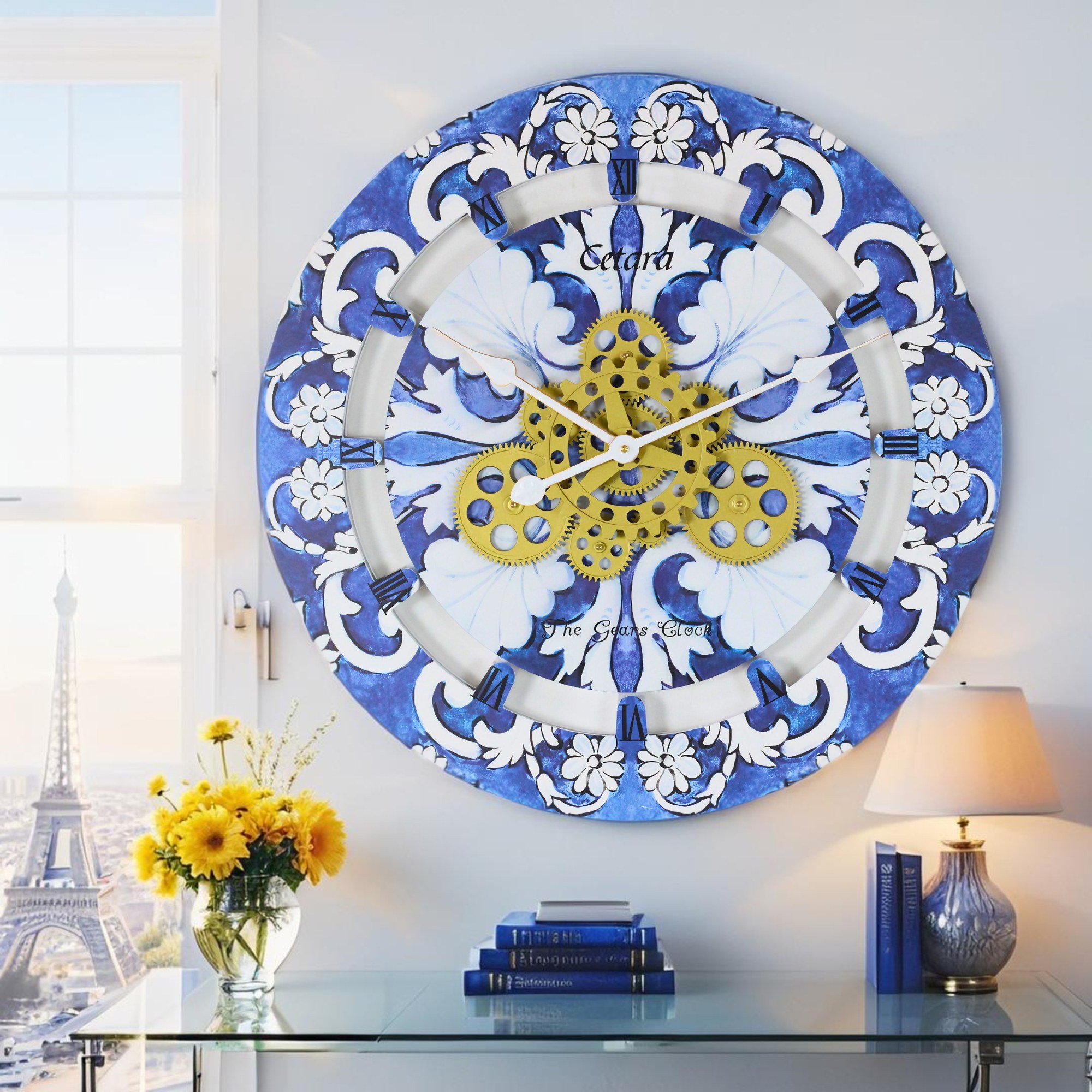
Click here to Shop the ITALY LINE WALL CLOCK ROUND 24 INCH CETARA
Before we get into the specifics of analog clocks, it helps to think systematically. Most homes have far more time displays than their owners realize. A reasonable sweep covers:
- Smartphones and tablets — update automatically in most regions, but confirm your time zone setting hasn't drifted, especially if you've traveled recently.
- Smart speakers and displays — also auto-update, but worth a verbal check: "Hey [assistant], what time is it?"
- Microwave, oven, and range hood — almost never auto-update. Budget 90 seconds per appliance and do it before you forget.
- Car dashboard clock — a notorious offender. Consult your manual; most modern vehicles require holding two buttons simultaneously.
- Alarm clocks and bedside clocks — reset these the night before, not the morning after, so your alarm fires at the right new time.
- Analog wall clocks — these deserve the most deliberate attention, especially larger statement pieces or moving-gear clocks. More on this below.
The psychological trick that makes this manageable: do it Saturday evening, not Sunday morning. Setting everything the night before means you wake up in a home that already reflects the new time, rather than spending your morning in a disorienting limbo where your phone says one thing and your kitchen says another.
How to Reset an Analog Wall Clock — and Why Moving-Gear Clocks Need Extra Care
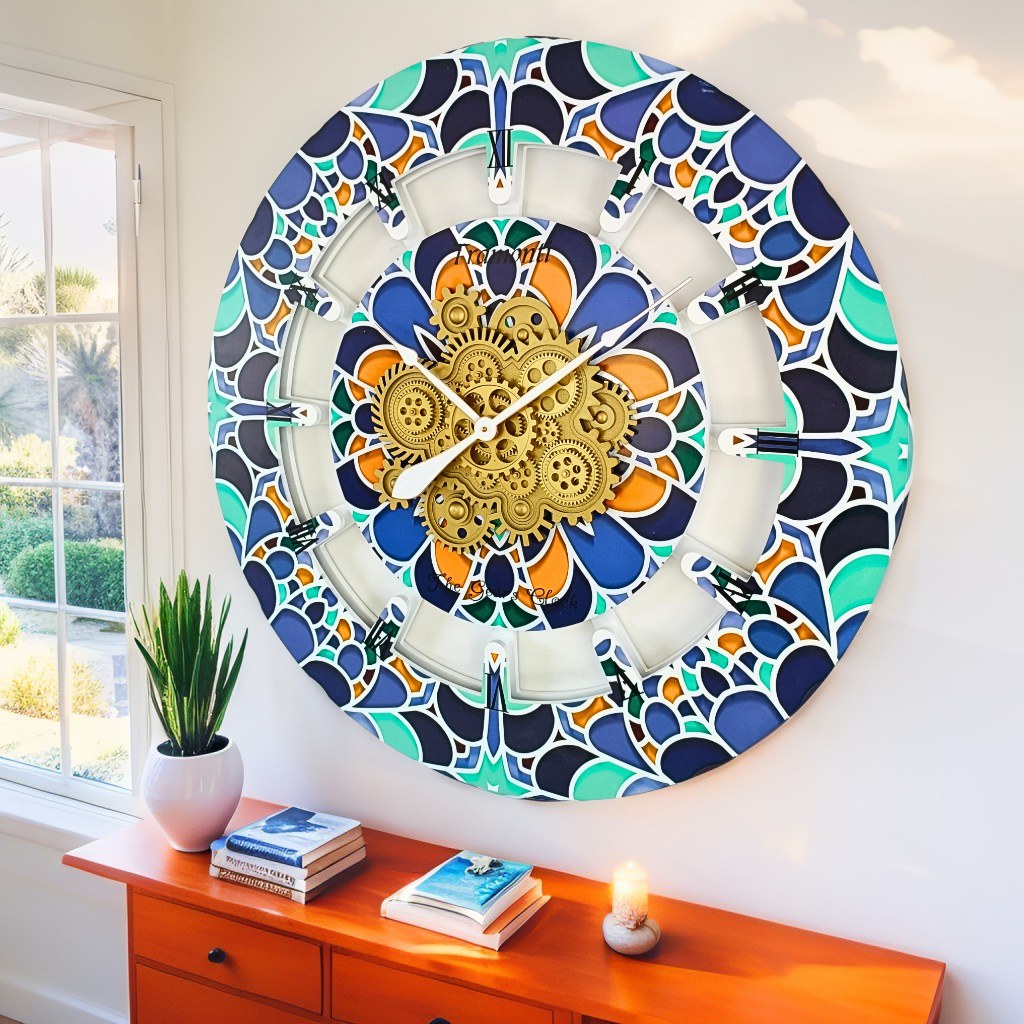
Click here to Shop the ITALY LINE WALL CLOCK ROUND 36 INCH TRAMONTI
For a standard quartz analog wall clock, the reset process is straightforward: remove the clock from the wall, locate the setting crown on the back of the movement, and turn the minute hand forward (always forward — never backward on a quartz clock, as reversing the hands can stress the gear train and damage the movement) until the hands reach the correct time.
For moving-gear wall clocks — the kind where a secondary gear system is visibly spinning on the clock face — there are two separate systems to be aware of. The timekeeping movement drives the hour and minute hands, and the decorative gear motor drives the visible spinning gears. These often run on separate batteries. When you're resetting for the time change, you only need to adjust the timekeeping movement; the gear motor runs independently and doesn't need to be stopped or reset.
The Italy Line clocks from The Gears Clock — including the 36-inch Atrani and Tramonti rounds, the 24-inch Cetara and Amalfi rounds, and the 24-inch square Praiano, Vietri, and Minori — all feature this dual-system design. The hypnotic, continuously rotating gears on the face run on their own power circuit, while the hands track actual time on a separate quartz movement. This means you can adjust the hands for the time change without interrupting the gear motion at all — the gears keep spinning while you rotate the crown. There's no need to remove batteries from the gear motor or worry about losing the gear synchronization.
Because these are substantial pieces — the 36-inch rounds in particular are large, wall-mounted statement clocks — take two people when you lift them off the wall for adjustment if possible, or simply reach around to the crown while the clock is still hanging if your arm clearance allows it. The goal is always to avoid unnecessary removal and re-mounting, which is where most wall clock damage actually happens.
Managing the Light Change: How to Use Your Clocks to Anchor the New Rhythm

Click here to Shop the ITALY LINE WALL CLOCK SQUARE 24 INCH VIETRI
The harder part of "fall back" isn't resetting the clocks — it's the weeks that follow, when afternoon darkness arrives like an ambush and your internal rhythm keeps insisting it should be an hour later than it is. This is where the placement of your analog clocks becomes almost as important as setting them correctly.
Sleep researchers and chronobiologists consistently recommend reinforcing time cues through your environment during transitions. A large, highly visible analog clock in the living room — particularly one you can see from your usual evening seating position — gives your brain a constant, conscious reference point that helps override the circadian confusion. Glancing at a clock face and reading 5:45 PM actively engages a different cognitive process than seeing a digital number on a phone, which you interpret more passively. The analog reading requires your brain to decode the position of hands in space, and that small act of active interpretation helps cement your conscious awareness of the new time.
If you have an Italy Line piece like the 36-inch Tramonti or Atrani hung in your living room or dining area, this transition period is actually when it earns its keep most visibly. The moving gears on the face create a subtle, peripheral sense of time passing — the clock isn't just a static display but a living presence in the room, something your eye catches even when you're not actively checking the time. During the weeks of early-November adjustment, that ambient awareness of time's movement can be genuinely grounding.
In bedrooms, consider the opposite principle: you want time visible enough to check, but not so prominent that it draws attention during sleep hours. A 24-inch piece like the Cetara or Amalfi round works well positioned where you can see it from bed during waking hours without it dominating the room or creating visual stimulation that interferes with sleep.
Building a Post-Transition Routine That Sticks

Click here to Shop the ITALY LINE WALL CLOCK ROUND 24 INCH AMALFI
The clock reset is a one-time event. The adjustment period that follows is where most people struggle, and it's worth treating it with the same intentionality you'd bring to jet lag recovery — because physiologically, it's the same kind of problem.
A few strategies that actually help:
- Hold your wake time constant. The single most powerful way to help your circadian rhythm lock onto the new schedule is to wake at the same time every day through the transition, regardless of how you feel. Your analog alarm clock or wall clock is your accountability partner here — not your phone, which is too easy to silence.
- Get light in the morning. After the fall-back transition, mornings are briefly lighter than they were — use it. Open blinds, sit near a window, go for a short walk. This is the primary environmental signal that resets your body clock.
- Dim the environment an hour before bed. Darkness is the other half of the equation. If sunset at 5:30 PM has your melatonin rising too early, you want your evening environment to gently resist that pull — warmer, dimmer lighting and a clear awareness of actual clock time (not perceived darkness) is the correction.
- Check a real clock before reaching for your phone. This sounds small, but it matters. In the first week after the time change, your phone is your least reliable guide to how time feels, because you're constantly recalibrating. A wall clock gives you a fixed, room-anchored reference that doesn't also tempt you with notifications.
The Italy Line's 24-inch square pieces — the Praiano, Vietri, and Minori — work especially well in kitchens and dining areas, where the morning routine anchors. Their Amalfi Coast-inspired tile patterns bring warmth and color to the spaces where you start and end your day, and at 24 inches square, they're substantial enough to read from across the room without dominating the wall.
By the end of the second week after the transition, most people have adjusted fully. The clocks in your home — set correctly, placed thoughtfully, and visible from where you actually live — will have done their quiet work of keeping you oriented through the shift. That's what good timekeeping does. It doesn't demand attention; it simply makes the truth about time impossible to avoid.

Click here to Shop the ITALY LINE WALL CLOCK SQUARE 24 INCH MINORI
Shop the collection: Italy 36 inch Round Clock Wall · CLOCK BY COLOR - BLUE
Keep exploring:
- Amalfi Coast on Your Wall: How to Style the Italy Line Clocks in a Modern Home
- How the Moving-Gear Mechanism in a Wall Clock Actually Works
- How to Style a Moving-Gear Wall Clock in the Bedroom (Without It Feeling Like a Waiting Room)
Frequently Asked Questions
Should I reset my analog wall clocks before I go to bed on Saturday night or Sunday morning?
Saturday night is strongly preferred. If you reset before bed, you wake up in a home where every clock already reflects the correct new time — including your alarm, which will fire at the right moment. Resetting Sunday morning while groggy is how people end up late to brunch or confused for hours about whether the phone or the kitchen clock is right.
Can I move the minute hand backward to fall back one hour on a quartz clock?
No — always move the minute hand forward on a quartz clock, never backward. Moving it backward can stress or damage the gear train inside the movement. To fall back one hour, simply advance the hands forward eleven hours until you reach the correct time. It takes an extra minute, but it protects the mechanism.
Do the moving gears on an Italy Line clock need to be stopped or reset when I adjust the hands for the time change?
No. The decorative moving gears on Italy Line clocks run on a separate motor and battery circuit from the timekeeping hands. You adjust only the hand-setting crown on the movement, and the gears continue spinning uninterrupted. There's no need to remove the gear motor batteries or worry about resynchronization — just set the hands forward to the new time and you're done.


